Monday, April 25, 2022

Video Series Features Hopkins 'Lights On' Traffic Safety Initiative

Hopkins Police Chief Brent Johnson

Five short videos highlighting police agencies across the country were recently produced by The International Association of Chiefs of Police (IACP) in collaboration with the National Highway Traffic Safety Administration (NHTSA). Each segment profiles an agency’s innovative approach to engaging the public through traffic safety initiatives. These efforts can be replicated in other communities, improving the quality of life for all. 

Hopkins Police Officer Chris Harriman speaks
 to community members about the
Lights On traffic safety program.
In total, there were five cities across the United States that were highlighted in the IACP traffic safety initiative video series: Alexandria, Virginia; Donalsonville, Georgia; Harrisonville, Missouri; Round Rock, Texas; and Hopkins, Minnesota.                  

Transparent and active

Hopkins is a small, but very diverse Minnesota community. The police department has focused on being transparent by educating community members on what officers do in the community, why they do it, and local policies, procedures, and state laws. Throughout the year, the Hopkins Police Department has built community trust and engagement through public outreach and participation in relationship-building initiatives like Lights On, a grant-funded program that provides vouchers for minor vehicle repairs in lieu of citations. 

The city has also formed the Multicultural Advisory Committee (MAC) and the Community Outreach and Relationship Enhancement Team (CORE), and is involved in the Joint Community Police Partnership (JCPP) with several nearby communities to support their efforts.

In addition to the Hopkins Lights On traffic initiative, viewers of the video series can learn about efforts to educate the public on traffic safety using: 

  • Social media videos.
  • Peer-to-peer school safety messages.
  • An innovative traffic reporting program.
  • A community-wide traffic safety collaboration. 

View the video series on traffic safety innovations that can be replicated in other communities. 

 If you have any questions or comments, you may contact me at tstille@lmc.org or give me a phone call at (651) 215-4051. 

Remember: Responder Safety = Public Safety

In the meantime, stay safe and be careful - 


Tracy


Monday, April 4, 2022

2022 Safety and Loss Control Workshops - Police Track

The 2022 Spring Safety and Loss Control Workshops kicked off this past week in Bemidji and Alexandria! It was certainly nice to get back to meeting in person with our members.

Bill  Everett presenting on the best
practices in police mental health
crisis response.
The morning police track started with a session on the liability of police pursuits and emergency vehicle operation. Police pursuits are on the rise in Minnesota and require an officer to make rapid decisions that can place an officer and the public at risk. A well-written pursuit policy, supervisor responsibilities, and training are all important considerations to reduce your agency’s liabilities and ensure the safety of the public, the police officers involved, and the driver and occupants of the vehicle being pursued. 

The morning continues with a session on best practices for police mental health crisis response. Estimates hold that between six and ten percent of all police calls involve someone with a serious mental illness. Officers can learn how to assess what mental health crisis call response is right for their community, given the available resources. In 2021, the Minnesota Chiefs of Police Association, the Minnesota Sheriffs’ Association, and the League of Minnesota Cities Insurance Trust brought a stakeholder group together to discuss these best practices, which range from co-responder teams, mobile crisis response teams, embedded mental health professionals, and police-only programs. 

Commander Brett Mushatt of the St. Cloud Police
Dept. presenting on the importance of peer support
for our public safety personnel.

The day concludes with an afternoon session on the importance of peer support for our public safety personnel. Peer support programs with trained colleagues that know how to provide psychological first aid can help deliver important emotional support that fellow public safety personnel may need during times of personal or professional crisis. Participants learned the benefits of peer support and the basics of creating a peer support program in their agencies.  

The Spring Safety and Loss Control Workshops will continue to travel across the state in the coming weeks. The $20 registration fee includes course materials, snacks, and a lunch. Select one of the schedule dates below if you want to register for the six credits of POST-approved police training:  

April 6 - Mankato

April 19 - St. Cloud

April  21 - St. Paul

April 26 - Plymouth

April 28 - Rochester

If you have any questions or comments, you may contact me at tstille@lmc.org or give me a phone call at (651) 215-4051.

Remember: Responder Safety = Public Safety

In the meantime, stay safe and be careful - 

Tracy


Tuesday, February 22, 2022

New Resources on Fentanyl Test Strips Now Available

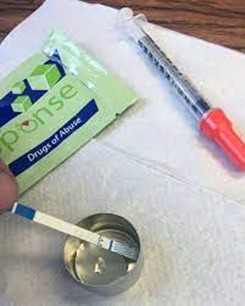
A fentanyl test strip in a a cap of water, with a needle and wrapper on a clean white towel.
Fentanyl test strips (FTS) are a form of drug testing technology that have shown to be effective at detecting the presence of fentanyl in drug samples. 

Fentanyl test strips are legal to carry in Minnesota as of July 2021. They are no longer within the definition of “drug paraphernalia” in Minnesota statute and are thus legal to possess, carry, and distribute. Learn more at Minnesota Statute 152.01, Subd. 18 (b).

New fact sheets on fentanyl test strips are now available from the MN Department of Health for public health workers and people who use drugs. These fact sheets provide information on the benefits of fentanyl test strips in overdose prevention, how to access and use fentanyl test strips, and other overdose prevention strategies.

To learn more about FTS and where you can access FTS kits for free in Minnesota, please contact the MDH Drug Overdose Prevention Unit by email at health.drugodprev@state.mn.us. You can also watch a video on how to use fentanyl test strips produced by Utah Naloxone. The FTS kits can be an effective tool for community engagement by police departments and can also have a positive impact on families and individuals who use drugs. 

Background on fentanyl

Fentanyl is a powerful synthetic opioid that is used medically to treat severe pain. Illicitly manufactured fentanyl is driving an increase in drug overdose deaths both nationally and in Minnesota. We have seen national overdose deaths soar to a record 92,000 in 2020, according to the Centers for Disease Control and Prevention (CDC).

A contaminated drug supply is driving much of the surge in overdoses. The most recent cases of fentanyl-related harm in the U.S. are linked to illegally made fentanyl. It is sold through illegal drug markets for its heroin-like effect. It is often mixed with heroin and/or cocaine as a combination product — with or without the user’s knowledge — to increase its euphoric effects. 

You may visit the Minnesota Department of Health’s Opioid Dashboard for more information on opioid overdose death, nonfatal overdose, use, misuse, substance use disorder, prescribing practices, supply, diversion, harm reduction, co-occurring conditions, and social determinants of health.

If you have any questions or comments, you may contact me at tstille@lmc.org or give me a phone call at (651) 215-4051. 

Remember:  Responder Safety = Public Safety

In the meantime, stay safe and be careful - 

Tracy