Tuesday, November 8, 2022

Grant Program Strives to Equip Every Law Enforcement Vehicle in Minnesota With Lifesaving Device


A grant from The Leona M. and Harry B. Helmsley Charitable Trust to the Center for Resuscitation Medicine (CRM) at the University of Minnesota will provide law enforcement, state and national parks, and other first responders with automatic external defibrillators (AEDs) to improve cardiac arrest survival rates. 

The three-year project funded through an $18.8 million grant from Helmsley aims to equip every law enforcement vehicle in the state with a Stryker CR2 AED and train law enforcement professionals to deliver immediate care prior to arrival of Emergency Medical Services (EMS) and improve cardiac arrest survival rates. The investment is the latest effort from Helmsley to increase access to these lifesaving devices, which are key to treating victims of cardiac arrest and improving patient outcomes. In partnership with the University of Minnesota Medical School, 8,300 AEDs will be distributed to local, state, and federal agencies across urban, suburban, and rural Minnesota. The AEDs will be distributed throughout the state by region. A plan is also in place to consider urgent needs so that an agency does not need to wait for their region to be eligible.

The grant is to replace all devices in an agency plus any additional needs. Any department participating must accept units for every vehicle in their fleet; the grant is not for single or additional needs. This will ensure that your department has the newest equipment and can benefit from the comprehensive service and quality assurance plans that are included with the AED.

The requirements of the grant are very easy. One person from your agency must attend regional training and they will be given tools to bring back to share with the entire department. Once the training at your department is complete, AEDs will be shipped directly to your department, typically within a couple weeks. A team at Stryker and the CRM will be available to assist with implementation.  

There are several additional benefits of this program, including an 8-year service plan that includes a case review and unit management tool for free. 

Using Wi-Fi connectivity, these self-monitoring devices can report their status to a centralized online data repository, allowing law enforcement agencies to know their devices are ready or in need of maintenance. For more information about this unique grant program, watch this KSTP news story or visit the Minnesota AED Project website for additional materials. 

Applications are submitted through the Helmsley Trust’s Grants Portal and you may email mnaed@umn.edu with questions about this grant or contact me direct at tstille@lmc.org or by phone at (651) 215-4051.  

Remember: Responder Safety = Public Safety

In the meantime, stay safe and be careful!

Tracy 


Tuesday, October 11, 2022

Stretch N’ Bend Exercise Program Aims to Reduce Firefighter Injuries

A guest post by LMCIT Public Safety Specialist Troy Walsh

Fire service is a physically demanding job, and firefighters are often called “tactical athletes” as they require physical training aimed at optimizing their occupational physical and mental performance.  

Firefighters must be prepared at a moment’s notice to respond to an emergency. Their personal protection equipment (PPE) needs to be assembled and ready, apparatuses should be cleaned and organized, and equipment must be fueled or charged for quick deployment, but what about “us” — the firefighters? Are we physically prepared? 

Think like an athlete

An example of physically demanding
firefighter training.

Let’s look at athletes and their preparation for a competition that requires a certain level of physical fitness and skill. Baseball players are frequently stretching their legs and bodies to be ready to make a quick run to first. They play catch to warm-up their arms, shoulders, and wrists since they will need to throw and catch at some point in the game! 

How about you? If you play golf, do you walk up to the first tee box and just tee up the ball and swing away? No, 99% of us will hit the driving range or take a few practice swings at the tee box, while others have a whole routine before they play. If we do this for a game, why aren’t we doing this as firefighters? Remember — firefighters are tactical athletes.

Incorporate physical preparation into your training

There are different staffing models in the fire service, including career firefighters, part-time, paid-on-call, duty-crew, and volunteers. We almost never know when an emergency is going to come in, and it’s sometimes difficult to prepare our bodies for the physical demands of the job. Depending on your staffing model, you can incorporate some physical preparations into your crews. 

Let’s look at training, especially physical training. This should be a controlled environment, and in most cases a lot of preparation is included in a successful training event. The goal of training is to educate members, sharpen-skills, and build muscle memory. If this is such a controlled event, why are sprain & stain injuries the largest claims in firefighter training? Are we preparing for the physical demands of the training event by warming up our bodies for the hands-on skills we are about to complete? 

Again, firefighters are tactical athletes … 

Simple stretches can help prevent injuries

Firefighters do Stretch N' Bend
exercises prior to training.
The League of Minnesota Cities Insurance Trust promotes a Stretch ‘N Bend Program for Public Safety to reduce worker injuries. This program is modeled after the Stretch ‘N Bend Program at Mortenson Construction.

Included in your training plan, you can complete the Stretch ‘N Bend exercises in less than 10 minutes. These quick and easy exercises can be completed during your training briefing, safety review, or a stand-alone practice. 

The goals of the Stretch N’ Bend Program are not only to help reduce —if not eliminate —injuries, but also to prepare your body for work activities, increase flexibility, promote blood circulation, improve range of motion, enhance muscle coordination and body awareness, delay muscle fatigue, and increase team morale.  

Free Stretch ‘N Bend Program PowerPoint

Interested in learning more about the Stretch ‘N Bend program for everyday use within your fire department? Please email me at twalsh@lmc.org and I will send you a free PowerPoint template that outlines the exercise program and can be personalized for your department! 

If you have any questions or comments, please contact me at twalsh@lmc.org or (651) 281-1231. 


Remember: Responder Safety = Public Safety

In the meantime, stay warm and be safe! 

Troy


Monday, September 26, 2022

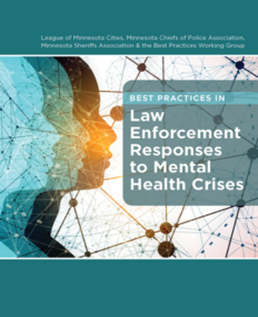
Best Practices in Law Enforcement Responses to Mental Health Crises


Many law enforcement agencies are experiencing a high demand for crisis services but have no clear answers for what to do about it. 

Recent statistics show about 20% of adults and 50% of adolescents in the United States live with a mental illness. Estimates also show between 6% and 10% of all police calls involve someone with a serious mental illness. These calls can all too often end in tragedy or people with a mental illness end up in jail. Studies have also estimated that up to 25% of all police shootings in recent years have involved people with a mental illness.

The League of Minnesota Cities recently partnered with the Minnesota Chiefs of Police Association and the Minnesota Sheriffs Association to develop a guide for best practices in mental health crisis response among law enforcement personnel. The guide’s content was written by attorney Bill Everett, principal of Everett Law LLC and a former police officer, and is based on a series of meetings with key law enforcement and mental health professionals from all areas of the state.

The best practices guide outlines the current response challenges faced by agencies and identifies realistic solutions and approaches for addressing those challenges based on a set of mutually agreed-upon guiding principles.

Download the guide, “Best Practices in Law Enforcement Responses to Mental Health Crises” (pdf)

Send your questions or comments to tstille@lmc.org or call me at (651) 215-4051.


Remember: Responder Safety = Public Safety

In the meantime, stay safe and be careful - 

Tracy